

Coal tar pitch is a complex material that may release polycyclic aromatic hydrocarbons (PAHs) and other hazardous components during heating, handling, processing, or manufacturing operations. For this reason, workplace exposure must be assessed carefully rather than judged only by visible dust, odor, or short-term symptoms.
In the United States, the Occupational Safety and Health Administration (OSHA) permissible exposure limit for coal tar pitch volatiles is 0.2 mg/m³ as an 8-hour time-weighted average (TWA), measured as the benzene-soluble fraction. The National Institute for Occupational Safety and Health (NIOSH) recommends a more protective reference value of 0.1 mg/m³ as a TWA of up to 10 hours, measured as the cyclohexane-extractable fraction.
These values are not interchangeable because they use different extraction methods, time bases, and regulatory purposes. Companies should always verify the limit applicable in their operating country, material specification, process conditions, and workplace monitoring method.
What Does “Coal Tar Pitch Volatiles” Mean?
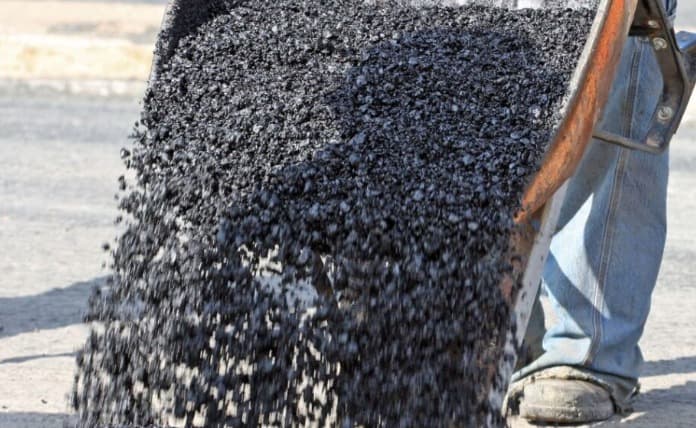
Coal tar pitch is a dark, carbon-rich residue produced from coal tar processing. It is used in applications such as aluminum production, refractory materials, graphite electrodes, carbon products, coatings, and certain industrial binding systems.
The occupational concern is often not simply the bulk material. It is the airborne fraction generated when the material is heated, transferred, crushed, mixed, baked, or otherwise processed. This may include fumes, vapors, aerosols, particulate matter, and PAH-containing compounds.
Coal tar pitch volatiles can include substances associated with anthracene, phenanthrene, pyrene, chrysene, acridine, and benzo(a)pyrene. The exact exposure profile can vary greatly according to raw-material quality, temperature, equipment design, ventilation, and work practices.
OSHA and NIOSH Exposure References
The following reference values are commonly used when evaluating occupational exposure to Coal tar pitch volatiles in the United States.
| Organization | Exposure Value | Time Basis | Analytical Fraction |
|---|---|---|---|
| OSHA | 0.2 mg/m³ | 8-hour TWA | Benzene-soluble fraction |
| NIOSH | 0.1 mg/m³ | Up to 10-hour TWA | Cyclohexane-extractable fraction |
A time-weighted average means that exposure is evaluated across the full work shift rather than from a single short sample. A worker may experience changing conditions during production, so representative monitoring should cover normal activities, peak-emission tasks, cleaning, maintenance, and abnormal operating conditions where relevant.
Why the Measurement Method Matters
A numerical exposure limit only has meaning when it is compared with a compatible sampling and laboratory method.
For example, the OSHA limit refers to the benzene-soluble fraction, while the NIOSH recommendation refers to the cyclohexane-extractable fraction. These laboratory extraction approaches do not necessarily produce identical results from the same air sample.
For this reason, an employer should not compare a laboratory result directly with an exposure limit unless the sampling medium, analytical method, reporting units, and extraction basis are appropriate for that limit.
A reliable industrial hygiene program should document:
- The material being evaluated
- The work process and temperature range
- The monitoring duration
- The employee group or task sampled
- The air-sampling method
- The laboratory analytical method
- The applicable legal or customer requirement
- The corrective actions taken if exposure is elevated
Is Coal Tar Pitch Considered a Carcinogenic Exposure Concern?
Coal tar products and coal tar pitch volatiles are widely treated as occupational carcinogenic concerns because of their PAH content. This does not mean that every use of Coal tar pitch creates the same risk level. Risk depends on concentration, exposure duration, route of exposure, process temperature, containment, ventilation, personal hygiene, and the effectiveness of controls.
However, the presence of a numerical occupational limit should not be interpreted as a guarantee of zero risk. Good practice is to reduce airborne exposure as far as reasonably achievable through process design and controls.
How Can Employers Reduce Coal Tar Pitch Exposure?
The most effective exposure-control strategy follows the hierarchy of controls.
1. Use Process Enclosure and Local Exhaust Ventilation
Enclose transfer points, mixing systems, furnaces, impregnation lines, and other emission sources where practical. Local exhaust ventilation should capture fumes and dust close to the source before they reach the worker’s breathing zone.
Ventilation performance should be inspected, maintained, and tested regularly. A ventilation system that is installed but poorly maintained may not provide adequate protection.
2. Control Heating Temperatures
Higher temperatures can increase the release of fumes and volatile compounds. Process teams should define appropriate temperature controls, monitor operating conditions, and avoid unnecessary overheating of pitch-containing materials.
3. Improve Handling and Housekeeping
Dry sweeping, uncontrolled compressed air, and poor transfer practices can spread contaminated dust. Use controlled cleaning methods, suitable vacuum systems, closed conveying where possible, and clear spill-response procedures.
Work areas should also provide appropriate washing facilities and clean changing arrangements to reduce the transfer of contamination beyond the process area.
4. Use Suitable Personal Protective Equipment
Personal protective equipment is important, but it should not replace engineering controls.
Depending on the task assessment, workers may need suitable gloves, protective clothing, eye protection, and respiratory protection. Respirator selection must be based on a documented hazard assessment, measured or expected concentration, filter or cartridge compatibility, fit testing, maintenance, and local legal requirements.
5. Train Workers and Review Exposure Data
Workers should understand where exposure can occur, how to use controls correctly, how to recognize process changes, and when to report damaged equipment or poor ventilation.
Exposure monitoring should be repeated when production volume, raw materials, temperature, equipment, ventilation, work methods, or employee tasks change.
Common Mistakes When Evaluating Coal Tar Pitch Exposure
Several mistakes can lead to inaccurate conclusions:
- Treating bulk material composition as equivalent to worker airborne exposure
- Comparing results from one analytical fraction with a limit based on another fraction
- Sampling only during low-emission activities
- Ignoring maintenance, charging, cleaning, and upset conditions
- Relying on odor instead of air-monitoring data
- Using respirators as the primary control instead of improving the process
- Assuming one country’s limit automatically applies in another market
The best approach is to combine representative air monitoring with engineering assessment, process knowledge, safety data sheets, and local regulatory review.
Selecting Coal Tar Pitch With Workplace Control in Mind
For procurement teams, selecting Coal tar pitch should involve more than carbon content, softening point, ash level, quinoline insolubles, or coke yield. Suppliers and users should also discuss process temperature, packaging format, dust-generation potential, storage conditions, handling systems, technical documentation, and the customer’s intended application.
A material that performs well in one production environment may require different controls in another. Early technical communication can help reduce operational risk, improve production consistency, and support compliance planning.
Conclusion
The widely referenced U.S. occupational limits for coal tar pitch volatiles are OSHA’s 0.2 mg/m³ 8-hour TWA and NIOSH’s 0.1 mg/m³ TWA up to 10 hours. However, these limits use different analytical fractions and should not be treated as directly interchangeable.
For safe and compliant handling, companies should identify the exact material and process, use compatible air-monitoring methods, control emissions at the source, protect workers from inhalation and skin contact, and confirm the legal requirements in the jurisdiction where work is performed.
For technical discussions about Coal tar pitch products, specifications, and application support, please contact our team.
FAQ
What is the OSHA exposure limit for coal tar pitch?
For coal tar pitch volatiles, OSHA lists a permissible exposure limit of 0.2 mg/m³ as an 8-hour time-weighted average, measured as the benzene-soluble fraction.
What is the NIOSH recommended exposure limit for Coal tar pitch?
NIOSH recommends 0.1 mg/m³ as a time-weighted average for up to a 10-hour work shift, measured as the cyclohexane-extractable fraction.
Are OSHA and NIOSH limits the same?
No. OSHA and NIOSH values differ in both concentration and analytical fraction. OSHA uses a benzene-soluble fraction, while NIOSH uses a cyclohexane-extractable fraction.
Is coal tar pitch exposure only a concern when the material is heated?
Heating often increases fume and volatile generation, but exposure can also occur during storage, transfer, crushing, mixing, cleaning, maintenance, and contact with contaminated surfaces.
Can a safety data sheet replace workplace air monitoring?
No. A safety data sheet provides hazard information, but it cannot determine the actual airborne concentration experienced by workers during a specific process. Representative workplace monitoring is needed when exposure assessment is required.
Post time: 10-16-2026