
Coal tar and coal-tar pitch are two names that often appear together in industrial supply chains, yet they are distinct materials with different forms, compositions, and applications. Confusing them can lead to wrong purchasing decisions, incorrect process parameters, and even safety issues on site. If you work with carbon materials, aluminum smelting, graphite electrodes, or waterproofing systems, understanding the difference is essential.
In short: coal tar is a thick, dark liquid by-product of coal carbonization, while coal-tar pitch is the solid residue left behind after that tar is distilled. Coal-tar pitch is not a separate raw material — it is the concentrated, refined result of processing coal tar. This article explains exactly how that transformation happens and why the two are used in very different ways.
What Is Coal Tar?
Coal tar is a viscous, near-black liquid produced as a by-product when coal is heated at high temperature in the absence of air — a process called carbonization or destructive distillation. This process is most commonly carried out during the manufacture of coke for the steel industry, but coal tar also results from coal gas production.
Because coal is a complex fossil material, the tar it yields is equally complex: a mixture of hundreds of organic compounds, including benzene, toluene, xylene, naphthalene, phenol, cresols, anthracene, and many polycyclic aromatic hydrocarbons (PAHs) and heterocyclic compounds. More than 400 individual substances have been identified in coal tar.
At room temperature, coal tar behaves as a viscous, slightly water-insoluble liquid. It is valuable precisely because it is a feedstock: it can be used directly for some applications, but its real industrial value lies in the range of chemicals that can be separated from it.
What Is Coal-Tar Pitch?
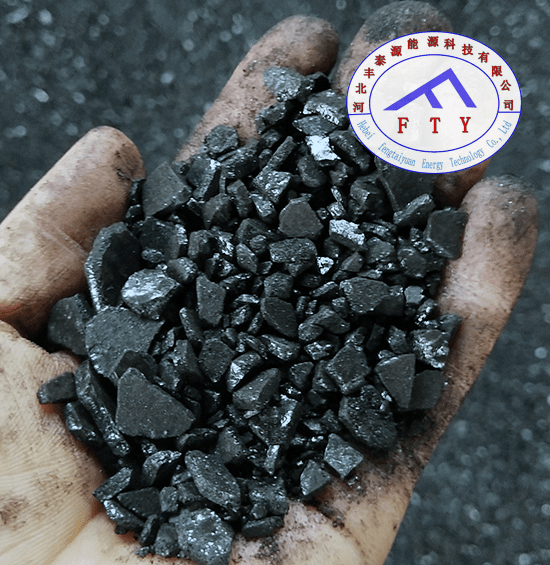
Coal-tar pitch is the residue remaining after coal tar is fractionally distilled. When crude coal tar is heated and distilled, the lighter and more volatile fractions are driven off in stages — first light oil, then carbolic (phenol) oil, naphthalene oil, wash oil, and finally anthracene oil. What remains in the still is coal-tar pitch: a black, solid or semi-solid material at room temperature.
The distillation step is the entire story of the difference between the two materials. The tar still contains a broad range of volatile aromatic compounds; the pitch is what is left after those volatiles have been removed. As a result, coal-tar pitch is dominated by high-molecular-weight polycyclic aromatic hydrocarbons, and it makes up roughly 50 to 60 percent of the original coal tar by mass.
Because the volatile fraction is gone, coal-tar pitch has a much higher carbon content and outstanding binding and coking characteristics. This is what makes it a prized raw material for carbon and metallurgical industries.
Key Differences Between Coal Tar and Coal-Tar Pitch
The table below summarizes the most important differences at a glance:
| Property | Coal Tar | Coal-Tar Pitch |
|---|---|---|
| Origin | Direct by-product of coal carbonization (coking) | Residue of coal tar after fractional distillation |
| Physical state at room temperature | Thick, viscous dark liquid | Black solid or semi-solid |
| Composition | Hundreds of aromatic compounds, incl. volatile oils (benzene, naphthalene, phenols, etc.) | Concentrated high-molecular-weight PAHs; volatile fractions largely removed |
| Carbon/volatile content | Higher volatile content, lower carbon concentration | High carbon content, low volatility |
| Softening behavior | Liquid at ambient temperature | Softens in the range of roughly 80–140°C depending on grade |
| Main role | Chemical feedstock for distillation and direct-use products | Binder and carbon raw material for industrial products |
Put simply, coal tar is the starting material, and coal-tar pitch is the refined, high-carbon end product of the same supply chain.
Types and Grades of Coal-Tar Pitch
Not all coal-tar pitch is the same. It is classified into grades according to its softening point and application, which are set by the degree of distillation:
- Medium-temperature pitch — moderate softening point (typically around 80–90°C), the common general-purpose grade.
- High-temperature (hard) pitch — higher softening point and coking value, used where extra thermal stability is needed.
- Binder grade pitch — formulated for carbon anodes, carbon blocks, and graphite electrodes.
- Impregnating pitch — low quinoline-insoluble (QI) content, used to fill pores inside carbon materials.
- Needle pitch — a premium grade for ultra-high-power graphite electrodes.
The softening point is the single most important specification: it determines how the pitch behaves during mixing, molding, and baking, and therefore which process it can serve.
Where Coal-Tar Pitch Is Used
Because of its high carbon yield, strong binding power, and excellent chemical and thermal resistance, coal-tar pitch is a critical material across several industries:
Aluminum smelting. Coal-tar pitch is the essential binder in prebaked carbon anodes for the Hall-Héroult process. Mixed with calcined petroleum coke, the heated pitch coats the aggregate, binds the particles together, and carbonizes during baking to form a strong, conductive anode.
Graphite electrode manufacture. Pitch is the binder in the production of graphite electrodes used in electric arc furnaces for steelmaking. Higher-grade pitches such as needle pitch enable the ultra-high-power electrodes required by modern mills.
Refractories and carbon products. Pitch serves as a binder in refractory bricks and in the production of carbon blocks, carbon-carbon composites, and other specialty carbon materials.
Waterproofing and roofing. Coal-tar pitch is a traditional material for roofing felts, waterproofing membranes, and protective coatings, valued for its resistance to water, chemicals, and weathering.
Road and pavement applications. Certain grades are used in road tar and sealant formulations where durability against fuels and solvents is required.
Feedstock for carbon materials. Pitch is increasingly studied and used as a precursor for carbon foam, carbon fibers, and energy-storage carbons, thanks to its high carbon content and tunable properties.
Safety and Handling Considerations
Both coal tar and coal-tar pitch contain polycyclic aromatic hydrocarbons, and coal-tar pitch is classified as a known human carcinogen by major health authorities. Safe handling is not optional:
- Always work with adequate ventilation and appropriate personal protective equipment.
- Avoid skin contact and inhalation of dust or fumes, especially when heating pitch.
- Follow local regulations for storage, waste disposal, and occupational exposure limits.
Anyone purchasing or handling these materials should work with suppliers who can provide consistent quality and proper technical and safety documentation.
Frequently Asked Questions
Is coal-tar pitch the same as asphalt? No. Asphalt is a petroleum-derived material, while coal-tar pitch is derived from coal carbonization. They differ in chemistry, temperature behavior, and performance, and should never be treated as interchangeable.
Is coal tar the same as creosote? Not exactly. Creosote is a distilled product fraction of coal tar, while coal-tar pitch is the residue of the same distillation. They are different fractions of the same raw material.
Can coal tar be used directly like coal-tar pitch? In most industrial applications, no. Coal tar's high volatile content makes it unsuitable as a binder for anodes and electrodes, which is precisely why distillation to coal-tar pitch is necessary.
Why is the softening point important in coal-tar pitch? The softening point controls how the pitch flows and binds during mixing and baking. Matching the correct grade to your process is essential for consistent product quality.
Coal tar and coal-tar pitch are two stages of the same industrial process: coal tar is the liquid by-product of carbonization, and coal-tar pitch is the solid, high-carbon residue left after the tar is distilled. Choosing the right material means understanding that difference. If you are sourcing coal-tar pitch and need consistent quality, technical guidance, or detailed specifications, our team is here to help — contact us, and we will be glad to assist.
Post time: 09-03-2026