

When you hear the word "coke," your mind might jump to a popular soda or perhaps the byproduct of coal used in steelmaking. However, in the world of industrial materials, there's another crucial player: petroleum coke, often shortened to petcoke. This solid, carbon-rich material is a product of the oil refining process, and it plays a vital role in powering industries and creating products we use every day. Far from being a simple waste product, petcoke is a valuable commodity with a wide range of applications, from fueling power plants to helping produce the aluminum in your car. This article will break down what petcoke is, how it's made, and explore the many ways this versatile material is utilized across the globe.
The Journey from Crude Oil to Coke
Every journey for petcoke begins deep within an oil refinery. The process starts with crude oil, a complex mixture of thousands of different hydrocarbon molecules. In the refinery, this crude oil is heated and separated into different parts, or fractions, in large distillation towers. Lighter fractions become gasoline and jet fuel, while heavier ones are used for diesel and lubricating oils. What’s left at the very bottom are the heaviest, most stubborn residual oils.
These dense, long-chain hydrocarbon materials are sent to a specialized part of the refinery called a coker unit. Inside the coker, these heavy residues undergo a harsh thermo-based chemical engineering process known as "cracking." Intense heat is applied, which splits the long chain hydrocarbons of petroleum into shorter chains, creating more valuable liquid fuels and gas. The solid, concentrated carbon left behind at the end of this final cracking process is petroleum coke. This initial product, taken directly from the coker, is called green coke, not because of its color, but because it is raw and unprocessed.
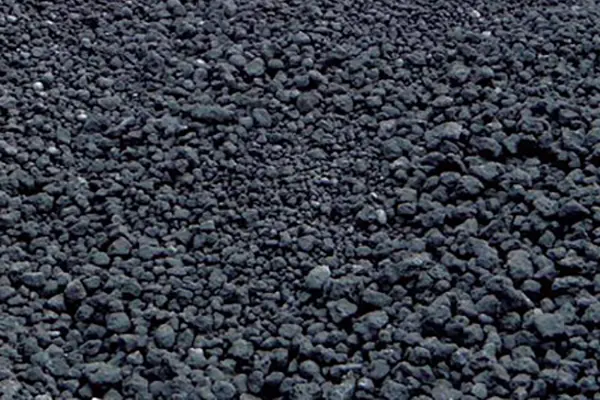
Not All Petcoke is the Same: Fuel Grade vs. Calcined Coke
The raw green coke that emerges from the coker is not a uniform product. Its specific chemical and physical properties depend heavily on the nature of feedstock—the type of crude oil it came from. There are two basic types of petroleum coke based on its intended use: fuel-grade coke and calcined coke.
Fuel grade petcoke is essentially the raw green coke. It has a very high heating value, often containing more energy per pound than coal. This high calorific value makes it an effective and inexpensive fuel. It is widely used as fuel in industrial applications like cement kilns and power generation plants. However, the sulfur content of fuel-grade petcoke can be high, which means its combustion can emit significant amounts of sulfur dioxide, a major pollutant. The amount of coke used as fuel is often determined by local environmental regulations.
For applications that require high purity, green coke must be processed further. This is where calcination comes in. The coke is calcined by heating it in a large rotary kiln to temperatures above 1300°C. This intense heat burns off any remaining volatile hydrocarbons, moisture, and other impurities. The result is calcined petroleum coke, a product that is over 98% pure carbon. This densified, high-purity material has excellent electrical conductivity and is essential for many metallurgical processes.
What is Petroleum Coke Used For in Industry?
While fuel-grade coke has one primary purpose, the applications for calcined petroleum coke are far more diverse and specialized. The unique properties of this material make it a critical feedstock for several major industries.
The single largest consumer of calcined petroleum coke is the aluminum industry. Calcined petroleum coke is used as the primary raw material to create large carbon anodes. These anodes are fundamental to the smelting process, conducting the massive electrical current needed to transform alumina (aluminum oxide) into pure liquid aluminum. Roughly half a ton of these carbon anodes is consumed for every ton of aluminum produced, making petcoke an indispensable part of the supply chain.
The steel industry is another significant user. Here, coke is also used as a recarburizing agent to increase or adjust the carbon content of steel, which is critical for achieving the desired strength and hardness. A special, high-value type of coke called needle coke is particularly important. Needle coke is produced exclusively from either specialized petroleum or coal tar pitch feedstocks and is used to manufacture the massive graphite electrodes needed for electric arc furnaces, which are used to recycle scrap steel.
Other uses include the production of titanium dioxide, a white pigment used in everything from paint and plastics to sunscreen and food coloring. In this process, petcoke acts as a reducing agent. The versatility of petroleum coke used across these sectors highlights its importance in modern manufacturing.

Petcoke vs. Coal and Met Coke: What's the Difference?
It’s easy to group coke and coal together, but they are distinct materials. Coal is a mined fossil fuel, while petcoke is a manufactured byproduct of crude oil refining. While both are burned for energy, petcoke generally has a higher carbon content and a higher heating value. However, depending on the source crude oil, it can also have a higher sulfur content than many types of coal.
Petcoke should also not be confused with met coke (metallurgical coke). Met coke is made from coal, not oil. Select grades of coal are heated in special coke ovens in the absence of air. This process drives off volatile matter, including gases and volatiles and the moisture in the coal, leaving behind a strong, porous material that is almost pure carbon. The unique strength of met coke is essential for its role in blast furnaces, where it provides not only heat but also structural support for the iron ore and limestone it is layered with. While both calcined petcoke and met coke are high-purity carbon sources, they are produced differently and have distinct primary applications in the steel and titanium smelting industry.
The journey of petroleum coke from a heavy residue at the bottom of a barrel of crude oil to a critical industrial material is a fascinating example of modern chemical engineering. Whether it's being used as a potent fuel or refined into a high-purity carbon for advanced manufacturing, coke or petcoke is a foundational commodity that helps build and power our world.
- Petroleum coke (petcoke) is a carbon-rich solid material that is a byproduct of the oil refining process.
- It is created in a coker unit, where heavy hydrocarbon residues from crude oil are thermally "cracked."
- The raw product is called green coke and can be used as fuel grade coke due to its high heating value.
- Green coke can be further processed through high-temperature heating (calcining) to produce high-purity calcined petroleum coke.
- Calcined petroleum coke is essential for producing carbon anodes for the aluminum industry and is also used in the production of steel and titanium dioxide.
Post time: 01-07-2026