

Liquid asphalt is usually made from asphalt binder combined with a liquid medium that helps reduce viscosity and improve workability. Depending on the product type, that liquid medium may be petroleum solvent, water with emulsifying agents, or another formulation component designed for handling, spraying, mixing, or surface application.
In simple terms, asphalt itself is a dark, sticky, petroleum-derived material made mainly of complex hydrocarbons. It becomes “liquid asphalt” when it is processed into a form that can flow, coat, penetrate, or be sprayed at practical application temperatures. This makes liquid asphalt useful in road maintenance, pavement construction, waterproofing, surface sealing, and industrial coating work.
Asphalt Binder: The Core Ingredient
The main ingredient in liquid asphalt is asphalt binder, sometimes called bitumen or asphalt cement. It is the heavy residue left after crude oil refining. This binder contains a complex mixture of hydrocarbons, resins, asphaltenes, and oils.
Asphalt binder gives the material its waterproofing ability, adhesive quality, black color, and flexible behavior. It can bind aggregate in road surfaces, seal small voids, and protect surfaces from moisture intrusion.
On its own, asphalt binder is thick and sticky. At normal temperatures, it may be semi-solid or highly viscous. To make it easier to apply, manufacturers modify its form through heating, emulsification, dilution, or blending.
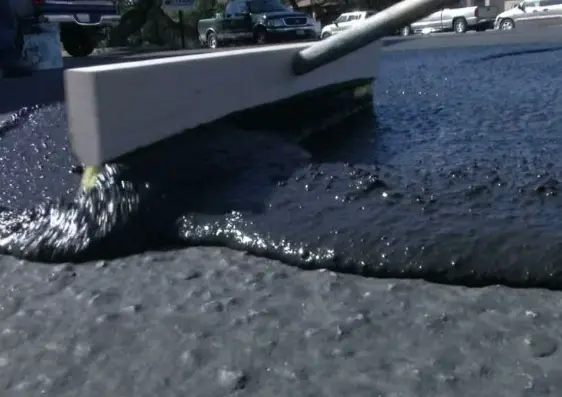
Main Types of Liquid Asphalt
The composition of liquid asphalt depends on the type. The three most common categories are cutback asphalt, asphalt emulsion, and hot-applied liquid asphalt.
Cutback Asphalt
Cutback asphalt is made by blending asphalt binder with a petroleum solvent. The solvent reduces viscosity, allowing the asphalt to be sprayed or mixed at lower temperatures. After application, the solvent evaporates, leaving asphalt binder behind.
Cutback asphalt can be useful in certain road maintenance and paving applications, but environmental and safety requirements have reduced its use in many markets because solvents release volatile compounds.
Asphalt Emulsion
Asphalt emulsion is made by dispersing tiny droplets of asphalt binder in water with the help of emulsifying agents. This produces a fluid material that can be applied at lower temperatures and often with lower solvent content than cutback asphalt.
Emulsions are widely used for tack coats, fog seals, slurry seals, chip seals, cold mixes, and pavement maintenance. Once applied, the emulsion “breaks,” meaning the water separates or evaporates and the asphalt binder remains on the surface or around the aggregate.
Hot Liquid Asphalt
Some asphalt products are applied in a liquid state because they are heated. In this case, the material may not contain a solvent or water carrier. Instead, heat lowers the viscosity enough for pumping, spraying, or mixing.
Hot liquid asphalt is common in paving operations where asphalt binder is mixed with aggregates to produce hot mix asphalt.
What Additives May Be Included?
Modern liquid asphalt products may include performance additives depending on the intended application. These additives can improve adhesion, flexibility, curing behavior, temperature resistance, water resistance, storage stability, or compatibility with aggregates.
Common formulation considerations include:
- Polymer modification
- Anti-stripping agents
- Emulsifiers
- Stabilizers
- Fillers
- Rejuvenators
- Performance enhancers
- Specialty oils or fluxing agents
The exact formula depends on whether the product is designed for roads, roofing, waterproofing, sealing, or industrial coating.
How Liquid Asphalt Is Used in Road Construction
In road construction, liquid asphalt is valued because it can coat surfaces and bind materials effectively. It may be sprayed as a tack coat between pavement layers to improve bonding. It may also be used in chip seal applications, where asphalt is sprayed onto a road surface and covered with aggregate.
In cold mix applications, liquid asphalt can help produce a workable mixture without the high temperatures required for hot mix asphalt. This can be useful for patching, rural roads, temporary repairs, or maintenance work.
The correct product depends on climate, traffic level, aggregate type, curing time, and construction method.
Waterproofing and Sealing Applications
Because asphalt naturally resists water, liquid asphalt is also used in waterproofing and sealing products. It can be applied to protect foundations, roofs, tanks, pipes, concrete surfaces, and other structures from moisture exposure.
In these applications, the material must be selected carefully. A road-grade asphalt emulsion may not perform the same as a waterproofing-grade asphalt coating. Buyers should review viscosity, solids content, curing time, adhesion, flexibility, and service temperature before choosing a product.
Is Liquid Asphalt the Same as Bitumen?
The terms asphalt and bitumen are often used differently depending on the region. In many markets, bitumen refers to the binder material, while asphalt may refer to the paving mixture made with aggregate. In other markets, asphalt can refer to the binder itself.
Liquid asphalt generally means asphalt binder that has been made fluid through heat, solvent, emulsification, or formulation. The important point is to check the technical data rather than rely only on naming.
What Buyers Should Check Before Ordering
Before purchasing liquid asphalt, buyers should confirm the application, product type, viscosity grade, curing method, solids content, storage requirements, packaging, and environmental conditions.
For road work, aggregate compatibility and climate are critical. For waterproofing, adhesion and flexibility may matter more. For industrial coatings, chemical exposure and temperature conditions may become important.
Buyers should also consider handling safety. Some liquid asphalt products require heating, ventilation, protective equipment, or special storage procedures. A reliable supplier should provide technical support and help match the product to the project.
Final Thoughts
Liquid asphalt is made from asphalt binder combined with a liquid carrier, processing method, or formulation system that allows it to flow and be applied more easily. Depending on the type, it may contain petroleum solvent, water and emulsifier, heat-applied binder, polymers, stabilizers, or performance additives.
The right liquid asphalt depends on the intended use, whether for road construction, pavement maintenance, waterproofing, sealing, or industrial coating. Understanding its composition helps buyers choose a product that fits the application rather than relying on appearance alone.
For liquid asphalt product information and material support, visit ZG FTY.
Post time: 08-26-2026