
My name is Allen, and as the owner of a major Chinese factory with seven production lines, I've spent years immersed in the world of coal tar products and petroleum coke. I've had the privilege of speaking with countless industry leaders, from engineers at massive aluminium smelter facilities to decisive procurement officers like Mark Thompson in the USA. They all share a common goal: sourcing high-quality, reliable materials that ensure their operations run smoothly and profitably. The production of aluminium is a complex, energy-intensive process, and at its very heart lies a critical component that is often overlooked: the carbon anode. And the performance of that anode depends almost entirely on the quality of its binder—coal tar pitch.
This article is your deep dive into the scientific and technical world of coal tar pitch and its vital role in the aluminium industry. We will explore what makes this material so special, how it transforms simple coke particles into a high-performance anode, and what you, as a buyer, need to look for to ensure you're getting the best. Understanding the nuances of your binder is the first step toward optimizing anode quality, improving efficiency, and securing a more stable supply chain for your aluminium production.
What is Coal Tar Pitch and Where Does it Come From?
At its most basic, coal tar pitch is a black, solid, or highly viscous liquid at room temperature, obtained from the processing of coal tar. It is the residue left over from the distillation of coal tar. Think of it like this: when coal is heated to very high temperatures in the absence of air (a process called coking) to produce metallurgical coke for the steel industry, a thick, black liquid called coal tar is generated as a byproduct. This raw coal tar is then sent to a distillation plant where it is heated in stages to separate its various valuable components. The lightest, most volatile components are removed first, leaving behind the heaviest fraction—this is coal tar pitch.
The chemical composition of pitch is incredibly complex. It's a rich mixture of thousands of different organic compounds, predominantly polycyclic aromatic hydrocarbons (PAHs) and some heterocyclic compounds. This unique aromatic structure is precisely what gives coal tar pitch its exceptional binding properties. Unlike materials derived from petroleum, the high aromaticity of coal-tar pitch allows it to transform into a strong, electrically conductive carbon structure when heated, a process known as carbonization. This transformation is absolutely essential for its role as a binder in the aluminium industry. The quality of the final pitch depends heavily on the source of the coal and the precision of the distillation process.
Why is Pitch the Preferred Binder for Carbon Anodes in the Aluminium Industry?
For decades, coal tar pitch has been the undisputed champion binder for the production of carbon anodes used in the aluminium smelting process. There are several critical reasons for this dominance, all stemming from its unique chemical and physical properties. The primary function of the binder is to hold the aggregate, mainly calcined petroleum coke, together. It needs to act as a glue during the mixing and forming stages and then transform into a strong carbon bridge connecting the coke particles in the final baked anode.
The most important reason for coal tar pitch use is its high coking value. Coking value is a measure of the amount of solid carbon residue the pitch yields after it undergoes pyrolysis (thermal decomposition). A high coking value, typically over 50%, means the binder provides a large amount of carbon to create strong bonds within the anode, minimizing voids and maximizing density. Furthermore, the carbon produced from coal tar pitch is graphitizable, meaning it has a structure that is highly conductive to electricity—a crucial requirement for an anode in the electrolysis process. No other commercially viable binder material, including petroleum pitch, has consistently matched the combination of high coking value, excellent binding strength, and superior electrical conductivity offered by coal tar pitch. This is why it remains the gold standard for producing anode in aluminum production.
How is a Carbon Anode Actually Made?
The journey from raw materials to a finished carbon anode is a multi-step manufacturing process where the quality of the pitch is tested at every stage. Understanding this process highlights why consistent binder properties are so critical for aluminium producers. The process begins with the careful selection and blending of raw materials. The primary aggregate is petroleum coke, which has been calcined (heated to a high-temperature) to remove volatile matter and increase its density and electrical conductivity. This coke is crushed and sized into different fractions.
Next, these graded coke particles are heated and transferred to a mixer. Hot, liquid coal tar pitch, the binder, is then introduced into the mixer. The goal is to uniformly coat every single coke particle with a thin film of pitch. This mixture, known as the anode paste, must have the right consistency to be formed. The hot anode paste is then transferred to a mold and compacted under high pressure to form what is called a "green anode". At this stage, the pitch acts as a lubricant and glue, but the anode has very little mechanical strength. The green anode is then carefully cooled before moving to the next critical stage: baking. In massive, gas-fired furnaces, the anodes are slowly heated to over 1100°C (2000°F) for several weeks. During this intense thermal treatment, the pitch undergoes carbonization, transforming from a binder into a solid carbon matrix that cements the coke particles together. This baking process is what gives the final carbon anode its required density, strength, and conductivity.
<div style="text-align="center">
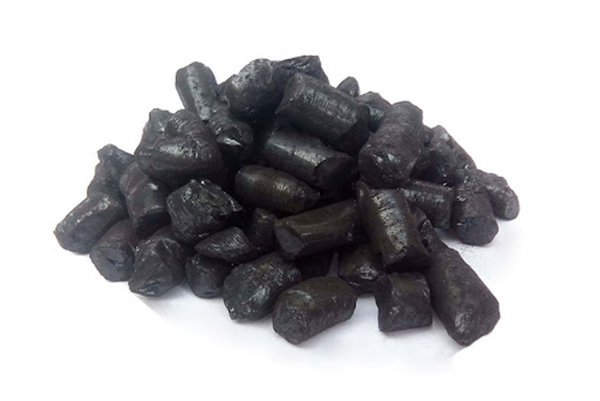
What are the Most Important Physical Properties of a High-Quality Anode Pitch?
For a procurement officer sourcing pitch for anode production, knowing the key specifications is crucial. While a full technical data sheet contains many parameters, a few key physical properties directly dictate the performance of the pitch as a binder. These are the metrics we obsess over at our factory to ensure we deliver a consistent, high-quality product.
- Softening Point (SP): This is the temperature at which the pitch begins to flow. It's a critical parameter for the anode manufacturing process. If the pitch softening point is too low, the green anode may deform during handling and baking. If it's too high, more energy is required to melt the pitch, and it may not properly wet the coke particles. A typical pitch softening point for anode grade pitch is between 100°C and 120°C.
- Coking Value: As mentioned, this is one of the most important binder properties. It represents the percentage of the pitch that converts to carbon during baking. A higher coking value means a stronger, denser anode.
- Quinoline Insoluble (QI): This measures the content of solid, fine carbon particles suspended in the pitch. These particles play a complex role, influencing viscosity and final anode properties. We'll discuss this more in a moment.
- Toluene Insoluble (TI): This measures the content of higher molecular weight hydrocarbon components. A higher TI content is generally associated with better binding characteristics and a higher coking value.
- Viscosity: The viscosity of the molten pitch affects how well it mixes with and coats the coke. It must be low enough at mixing temperatures to ensure good wettability but high enough to prevent it from draining away from the coke particles.
These physical properties are all interconnected. A reliable supplier must be able to control these parameters within a very tight range from batch to batch, as any variation can disrupt the optimizing the anode recipe at the aluminium smelter.
How Does Pitch Interact with Coke Particles to Form a Strong Anode?
The interaction with coke is where the magic of coal tar pitch truly happens. It's more than just a simple glue; it's a chemical and physical transformation. When the molten pitch is mixed with the hot coke particles, the first critical step is wettability. The pitch must have the right viscosity and surface tension to spread out and form a thin, uniform film over the entire surface of the coke. Good wetting ensures there are no dry spots and that the final anode is homogenous.
As the green anode is baked, the pitch undergoes pyrolysis. The polycyclic aromatic hydrocarbons in the pitch break down, releasing volatile gases and polymerizing into larger and larger aromatic structures. This new carbon structure, called pitch coke, forms bridges between the original petroleum coke particles, creating a solid, monolithic block. The quality of these bridges determines the mechanical properties and electrical conductivity of the final anode. A good pitch will have excellent aromaticity, which facilitates this transformation into a strong, graphitic carbon structure. This intimate interaction with coke is what transforms a loose pile of coke into a robust electrode capable of withstanding the harsh conditions inside an electrolysis cell.
<div style="text-align="center">
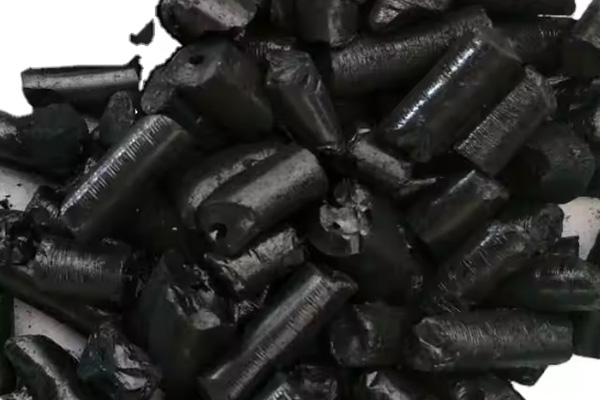
What is the Role of Quinoline Insoluble (QI) in Anode Pitch?
The topic of Quinoline Insoluble (QI) content in pitch is often debated among experts in the aluminium industry. QI refers to the microscopic carbon particles that are inherent to coal tar pitch and are insoluble in the solvent quinoline. These are not contaminants but a natural part of the pitch. For a long time, the prevailing wisdom was that a lower QI was better. However, modern research and extensive practical experience have shown that a certain amount of fine, dispersed QI is actually beneficial for anode quality.
These fine QI particles act as a filler, increasing the density of the binder matrix. They also provide nucleation sites during carbonization, which can help develop a stronger, more isotropic (uniform in all directions) coke structure from the pitch. This can improve the mechanical strength and resistance to oxidation of the baked anode. However, the key is the nature of the QI. Ideally, it should consist of very small, primary particles formed during the initial coking process. Large, secondary QI particles, which can form if the pitch is subjected to excessive heat during storage, can be detrimental to anode performance. A good pitch supplier must control not just the amount of QI (typically 6-12%) but also its morphology. We, as a specialized High Quality Coal Tar Pitch Factory and Supplier, pay close attention to this crucial parameter.
Can Petroleum Pitch be a Substitute for Coal Tar Pitch in Anode Production?
The question of using petroleum pitch as a replacement for coal tar pitch is a recurring one, driven primarily by environmental concerns about the PAHs in coal-tar and fluctuations in supply. Petroleum pitch is a residue from the refining of petroleum, specifically from processes like fluid catalytic cracking. While it is also a carbonaceous material, its chemical structure is fundamentally different from that of coal tar pitch. It tends to be more aliphatic (chain-like) and less aromatic.
This difference has significant consequences for its performance as an anode binder. Petroleum pitch generally has a lower coking value and poorer wettability with petroleum coke. The carbon it forms during baking is less graphitic, which can lead to lower electrical conductivity and higher reactivity in the baked anode. While there has been extensive research into modifying petroleum pitch to improve its properties, it has not yet been able to consistently match the performance of high-quality coal tar pitch on a large commercial scale. For the demanding process of primary aluminium production, coal tar pitch remains the superior and most reliable binder for producing anode.
How Does the Quality of the Binder Affect Overall Aluminium Production Efficiency?
The quality of the anode has a direct and significant impact on the efficiency and cost of aluminium production. Since the anode is consumed during the electrolysis process, any issues with its performance ripple through the entire operation. A low-quality pitch leads to a low-quality anode, which in turn causes a host of problems.
A poorly made anode will have lower density and mechanical strength, making it prone to cracking from thermal shock when it is placed in the hot electrolysis cell. It may also have higher electrical resistivity, which means more energy is wasted as heat, reducing the overall energy efficiency of the process. Furthermore, a highly reactive anode will be consumed faster by air and CO2 oxidation, meaning more anodes are needed per ton of aluminium produced. This not only increases the direct cost of the anodes but can also lead to higher greenhouse gas (GHG) emissions. In short, investing in a high-quality pitch is not an expense; it is a direct investment in the operational efficiency, energy consumption, and environmental performance of the aluminium smelter.
<div style="text-align="center">
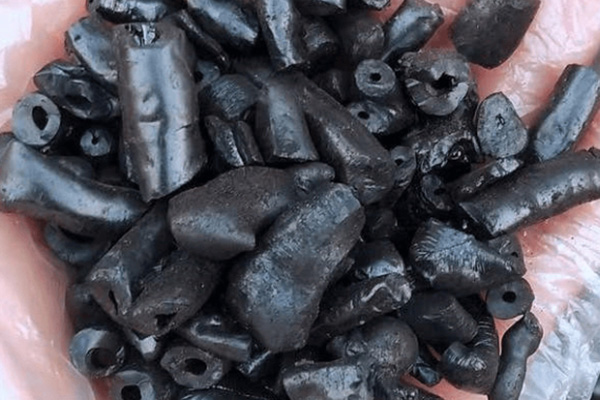
What Challenges are Faced in Anode Manufacturing and How Can a Good Pitch Help?
Anode manufacturing is a precise science, and plant operators face daily challenges in maintaining quality and consistency. A key challenge is managing the variability of raw materials. The properties of petroleum coke can vary from one supplier to another, and this requires adjustments to the anode recipe. A consistent, reliable pitch provides a stable foundation upon which these adjustments can be made. If the binder properties are also fluctuating, it becomes nearly impossible to produce high-quality anodes consistently.
Another challenge is minimizing cracks in the green anode and baked anode. A pitch with good rheological properties and optimal wettability creates a more homogenous anode paste, reducing stress points and the likelihood of cracking. During baking, the pitch must generate enough volatile matter to escape without building up pressure and cracking the anode, but not so much that it lowers the coking value and density. A high-quality binder, such as our specialized Ball pitch, is engineered to have a controlled devolatilization profile, helping to ensure the integrity of the anode throughout the intense thermal treatment. By providing a stable and predictable binder, we help our clients overcome these production hurdles and maintain high anode performance.
How to Reliably Source High-Quality Coal Tar Pitch for Anode Production
For a procurement officer, sourcing is where the theory meets reality. Finding a supplier who can consistently deliver high-quality pitch and navigate the complexities of international logistics is paramount. My advice, based on years of exporting to North America and Europe, is to look beyond the price tag and focus on three key areas: a commitment to quality control, proven logistics expertise, and transparent communication.
First, demand robust quality assurance. A reliable manufacturer will operate under a certified quality management system like ISO 9001 and will be able to provide detailed Certificates of Analysis (CoA) for every single batch. These documents should clearly state the key physical properties we've discussed, like softening point, QI, TI, and coking value. Be wary of any supplier who is hesitant to share this data or whose numbers seem too perfect. At our factory, we conduct multiple tests throughout the production process, ensuring the material loaded into the container is exactly what the customer ordered.
Second, verify their logistics and export experience. Late shipments can shut down an anode plant. Work with a factory, not just a trading agent, that has a dedicated export department and a proven track record of shipping to your country. They should understand the required documentation, packaging (e.g., in jumbo bags or as solid bulk), and shipping schedules. Finally, insist on clear and proactive communication. Your contact person should be knowledgeable and responsive. This is how you build trust and a resilient supply chain, ensuring you have the critical raw material you need for continuous anode production and, ultimately, successful aluminium production. We pride ourselves on being more than just a supplier; we are a reliable partner in the global aluminium industry.
In Summary
The humble carbon anode is a high-tech consumable that is fundamental to modern aluminium production, and its performance is inextricably linked to the quality of the coal tar pitch used as its binder.
Here are the key takeaways to remember:
- Pitch is Not Just a Glue: Coal tar pitch is a complex chemical precursor that transforms during baking to form a strong, electrically conductive carbon matrix, which is essential for a high-performance anode.
- Key Properties Matter: Pay close attention to specifications like Softening Point, Coking Value, and Quinoline Insoluble (QI) content, as they directly impact the anode manufacturing process and final anode quality.
- Quality In, Quality Out: A superior pitch leads to a stronger, denser, and more efficient anode, which in turn lowers energy consumption and improves the overall productivity of the aluminium smelter.
- Coal Tar Pitch is Still King: Despite research into alternatives like petroleum pitch, coal-tar pitch remains the unmatched binder for the production of carbon anodes due to its unique aromatic chemistry and high coking value.
- Source with Diligence: Partner with an experienced manufacturer that prioritizes quality control, has proven logistics expertise, and maintains transparent communication to build a reliable and resilient supply chain.
Post time: 09-02-2025