
Understanding the supply chain of industrial chemicals requires more than just a price list; it demands a deep dive into chemical properties, regulatory standards, and sourcing nuances. For procurement professionals navigating the complex world of coal tar derivatives, anthracene and anthracene oil represent both significant opportunity and technical challenge. This article provides a detailed exploration of these materials, referencing the NIST Chemistry Webbook data and US EPA guidelines to ensure you make informed, safe, and compliant purchasing decisions. Whether you are manufacturing dyes, organic semiconductors, or specialized coatings, understanding the behavior of this polycyclic aromatic hydrocarbon is essential for maintaining product quality and operational safety.
What characterizes the chemical structure and properties of anthracene?
Anthracene is a solid polycyclic aromatic hydrocarbon (PAH) consisting of three fused benzene rings in a linear arrangement. Visually, it appears as colorless to pale yellow crystals with a bluish fluorescence when exposed to ultraviolet (UV) light. For chemists and sourcing managers alike, the NIST Chemistry Webbook (Standard Reference Database Number 69) is the bible for verifying these physical constants. According to data for anthracene found in NIST records, it has a high melting point and specific spectral fingerprints that help identifying purity levels during Quality Control (QC).
The properties of anthracene are distinct from its isomers. While it shares the formula C14H10 with phenanthrene, their structures dictate different behaviors. Anthracene is less stable than phenanthrene and more reactive, particularly at the 9 and 10 carbon positions. This reactivity is exactly what makes it valuable for industrial synthesis, yet it also presents storage challenges. Phenanthrene and carbazole are common impurities found in crude anthracene, and their removal is a key indicator of supplier quality.
From a solubility perspective, anthracene is practically insoluble in water, which heavily influences its environmental fate. However, it dissolves in various organic solvents, especially at higher temperatures. Understanding these solubility profiles is crucial when formulating anthracene into liquid systems or during the purification process where azeotropic distillation might be employed.
How is anthracene produced from coal tar distillation?
The primary commercial source of anthracene is coal tar, a byproduct of coke production in the steel industry. When coal tar undergoes distillation, it is separated into various fractions based on boiling points. The fraction boiling between 300 and 360 °C—often referred to as the "anthracene oil" fraction—is where this valuable compound hides. This fraction is a complex soup containing anthracene, phenanthrene, carbazole, and other aromatic compounds.
To isolate pure anthracene, the anthracene oil is cooled, causing the solids to crystallize out. This yields "crude anthracene," which typically contains only 15% to 30% actual anthracene content. To reach the high purity required for dye manufacturing or electronics, we must employ advanced purification techniques. This often involves recrystallization from solvents or azeotropic distillation with ethylene glycol. A centrifuge is used to separate the crystals from the mother liquor.
In China, where we have deep access to high-temperature coal tar, we see a variety of extraction efficiencies. High-grade anthracene requires separating it from phenanthrene (which is abundant) and carbazole. The remaining liquid after crystallization is what we often refer to as filtered anthracene oil, which has its own set of industrial uses, such as feedstock for Carbon Black.
What is the difference between pure anthracene and anthracene oil?
It is vital for buyers to distinguish between the chemical anthracene and the commodity anthracene oil. Anthracene (the solid) is a defined chemical compound used as a raw material for synthesis. Anthracene oil, on the other hand, is a complex mixture—a liquid fraction of coal tar that remains after some solids have been removed or before full purification.
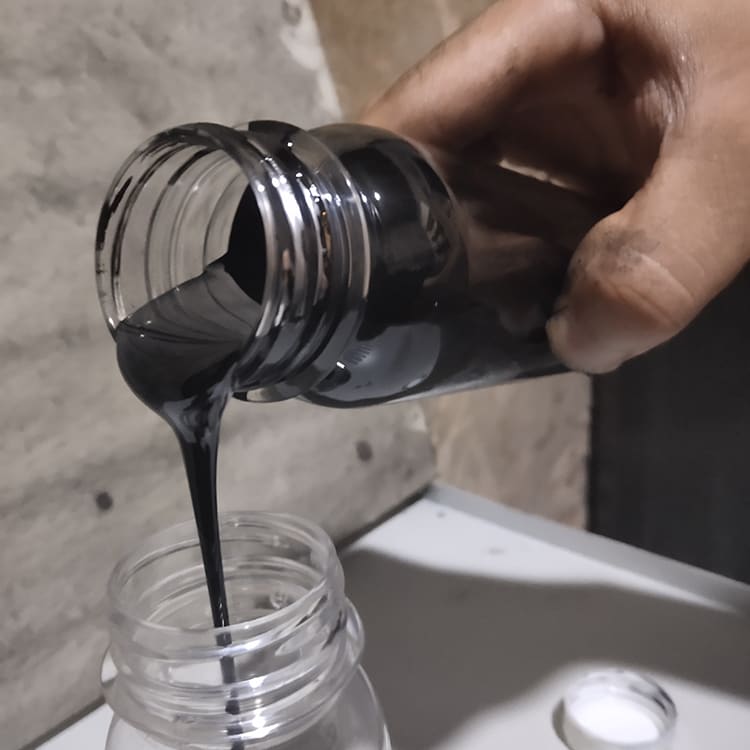
Anthracene oil is a heavy, dark liquid rich in aromatic compounds. It is often used as a starting material to produce carbon black, as a wood preservative (historically), or as a blending component for fuel oils. It contains a mixture of anthracene, phenanthrene, fluoranthene, and pyrene. Because it is a mixture, its specifications are usually defined by boiling range, specific gravity, and viscosity rather than a single chemical formula.
Conversely, when you buy anthracene solid, you are buying a specific molecule. You are looking for purity (e.g., 95% min), melting point, and low sulfur or carbazole content. The distinction is similar to buying pure sugar versus molasses; they come from the same source but serve very different kitchens. For reliable sourcing of the raw material base, consider our Coal tar pitch flakes, which are derived from similar processing streams.
Why is the oxidation of anthracene industrially important?
The most significant chemical reaction for anthracene in industry is its oxidation. When anthracene undergoes oxidation, it yields anthraquinone. This transformation is the gateway to a vast array of high-value products. Anthraquinone is the parent substance for a huge class of vat dyes, including the famous alizarin (Turkey Red). Without anthracene, the textile industry would lack some of its most durable and vibrant colors.
The oxidation of anthracene can be achieved using various oxidizing agents. Historically, sodium dichromate was used, but modern methods prefer catalytic oxidation using air or hydrogen peroxide. The reactivity of the central ring in anthracene makes it susceptible to attack by singlet oxygen and hydroxyl radicals. This reactivity is also why anthracene degrades in the environment under sunlight (photo-oxidation).
Beyond dyes, anthraquinone derivatives are used in the pulp and paper industry as pulping catalysts. Therefore, a stable supply of anthracene acts as a backbone for multiple downstream industries. If you are sourcing for a chemical plant, checking the efficiency of the anthracene-to-anthraquinone conversion rate of your raw material is a standard metric of quality.
How does NIST and the Chemistry Webbook aid in quality control?
For any analytical procurement manager, the National Institute of Standards and Technology (NIST) is a trusted ally. The NIST Chemistry Webbook (Standard Reference Database Number 69) provides critically evaluated data for anthracene. This includes thermochemical data, phase change data, and gas chromatography retention indices.
When we receive a batch of material, we compare its test results against NIST standard reference data. For instance, the IR spectrum or Mass Spectrum of our anthracene is matched against the NIST library to ensure no unexpected peaks appear, which would indicate contamination by isomers like phenanthrene.
Reliable Chinese suppliers should be able to provide Certificates of Analysis (CoA) that reference these standard methods. If a supplier cannot discuss their product in the context of standard reference data, it is a red flag regarding their QC capabilities. This adherence to standards ensures that the anthracene you buy will perform predictably in your organic semiconductor or chemical synthesis reactor.
What are the toxicological concerns and carcinogenicity of anthracene?
Safety is non-negotiable. When dealing with polycyclic aromatic hydrocarbons, the first question is always about toxicology. According to the International Agency for Research on Cancer (IARC), anthracene is classified in Group 3, meaning it is "not classifiable as to its carcinogenicity to humans." Unlike benzo[a]pyrene or some other PAHs found in coal tar, anthracene itself has not been conclusively proven to be carcinogenic in human or adequate animal studies.
However, "not classifiable" does not mean "harmless." Anthracene is a skin irritant and can cause photosensitivity. Exposure to anthracene dust combined with UV light can cause dermatitis, a phenomenon known as phototoxicity. The US EPA lists anthracene as a priority pollutant, not necessarily because it is a potent carcinogen, but because of its prevalence and potential ecological impact.
We must also consider genotoxicity. Most studies, including those referenced by Ullmann's Encyclopedia of Industrial Chemistry, indicate that pure anthracene is negative in the Ames test (a test for mutagenicity). However, technical grades containing impurities might show different results. This highlights the importance of sourcing high-purity grades to minimize human exposure to more dangerous associated PAHs.
How does the US EPA regulate anthracene in the environment?
The US EPA keeps a watchful eye on anthracene. It is listed as a Priority Pollutant under the Clean Water Act. This means there are strict limits on anthracene levels in industrial effluents and surface waters. The EPA's concern focuses on environmental fate and ecotoxicity.
Because anthracene is a hydrocarbon with low water solubility, it tends to adsorb to sediment and soil rather than staying dissolved in water. The Koc values (soil adsorption coefficient) for anthracene are high, indicating it sticks firmly to organic matter. This behavior is critical for risk assessment at industrial sites. If there is a spill, the anthracene will likely stay in the topsoil or sediment layers.
For companies importing or using anthracene in the US, compliance with TSCA (Toxic Substances Control Act) is mandatory. Furthermore, if you are releasing waste streams, you must ensure that anthracene concentrations meet the National Pollutant Discharge Elimination System (NPDES) permit limits. Failure to adhere to US EPA regulations can lead to severe fines and operational shutdowns.
What is the environmental fate of anthracene in water and soil?
Once released into the environment, the fate of anthracene is determined by its resistance to degradation and its tendency to bind to solids. In surface waters, anthracene can undergo rapid photolysis (breakdown by light). The half-life in clear water under sunlight can be quite short. However, in deep water or sediment where light doesn't penetrate, it persists.
Biodegradation is another pathway. Bacteria in soil and water can biodegrade anthracene, breaking open the rings to eventually form carbon dioxide and water. However, this process is slow, especially in anaerobic conditions (no oxygen). In groundwater, where oxygen and light are scarce, anthracene can remain for long periods.
Ecotoxicity studies, particularly on aquatic invertebrates like Daphnia, show that anthracene can be toxic, especially under UV irradiation. This photo-induced toxicity is a unique characteristic of some PAHs. The European Chemicals Agency (ECHA) also lists anthracene as a Substance of Very High Concern (SVHC) due to its PBT (Persistent, Bioaccumulative, and Toxic) properties in the environment. This aligns with our commitment to providing High temperature coal tar products that are handled with the utmost environmental stewardship.
What are the emerging uses of anthracene in organic electronics?
Beyond traditional dyes, anthracene is finding new life in high-tech applications. It is a prototypical organic semiconductor. Its ability to transport charge carriers and its strong fluorescence make it an ideal material for organic light-emitting diodes (OLEDs) and organic photovoltaics (solar cells).
In these applications, purity is paramount. Even trace amounts of oxidative impurities or isomers can quench the fluorescence or impede electron flow. High-purity anthracene crystals are also used as scintillators in high-energy physics to detect particles; they emit flashes of blue light when struck by radiation.
Research published by the American Chemical Society and John Wiley & Sons continues to explore derivatives of anthracene for flexible electronics. This shifts anthracene from being just a bulk chemical to a high-value specialty material. For buyers, this means that the "electronic grade" anthracene commands a significant price premium over "technical grade."
How do global regulations like REACH affect anthracene supply?
While the US EPA sets the tone in America, the European Chemicals Agency (ECHA) sets the global benchmark with REACH (Registration, Evaluation, Authorisation and Restriction of Chemicals). Anthracene oil and anthracene pastes are heavily regulated under REACH. ECHA has identified specific anthracene oils as substances that may require authorization for use.
This regulatory landscape affects global supply chains. If a Chinese factory wants to export anthracene or products containing it (like specific Medium temperature asphalt block) to Europe, they must ensure full REACH registration. This documentation proves that the toxicology and ecotoxicity have been evaluated.
For a US buyer like Thomas, checking if a supplier is REACH compliant is a good proxy for their overall regulatory maturity. It indicates that they have the data and the safety protocols in place to handle hazardous chemicals responsibly. It also suggests that their material is less likely to be stopped at customs due to documentation errors.
Summary and Key Takeaways
Navigating the market for anthracene and anthracene oil requires a blend of chemical knowledge and regulatory awareness. From its origins in coal tar distillation to its final destination in dyes or organic semiconductors, this hydrocarbon is as versatile as it is scrutinized.
- Distinguish the Product: Always specify if you need pure anthracene (solid, C14H10) or anthracene oil (liquid mixture). They are not interchangeable.
- Check the Purity: For high-end uses, ensure low levels of phenanthrene, carbazole, and sulfur. Use NIST standards for verification.
- Regulatory Compliance: Be aware of US EPA Priority Pollutant status and ECHA SVHC listings. Ensure your supplier handles risk assessment seriously.
- Safety First: While IARC places it in Group 3, standard toxicology protocols for handling irritants and potential photo-toxins must be followed.
- Environmental Stewardship: Prevent release into water/soil. Anthracene has high Koc values and potential ecotoxicity to aquatic life like Daphnia.
- Strategic Sourcing: Look for suppliers who integrate upstream coal tar resources (like High temperature asphalt) to ensure consistent supply and competitive pricing.
By focusing on these technical and regulatory details, you can secure a reliable supply chain that meets both your cost targets and your quality requirements.
Post time: 02-05-2026