

In the intricate world of chemical sourcing, few materials are as versatile yet misunderstood as carbon black. It is far more than just a pigment that makes things dark; it is a sophisticated additive that engineers the very performance of plastic, polymer systems, and rubber goods. For procurement professionals like you, understanding the nuances of carbon black—from its conductive properties to its manufacturing origins—is crucial for balancing cost with quality. This article explores why this material remains the backbone of industrial manufacturing, offering insights into electrical conductivity, reinforcement, and the critical specifications that drive market prices.
What exactly is carbon black and how is it produced?
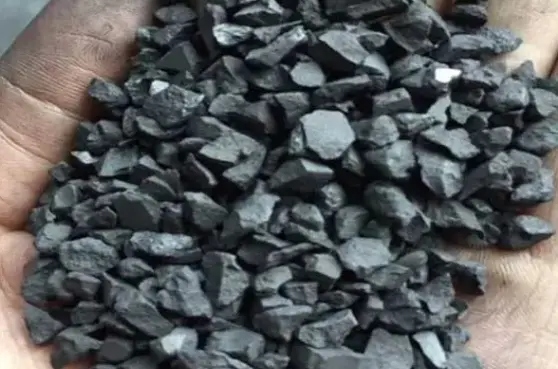
At its core, carbon black is virtually pure elemental carbon in the form of colloidal particles that are produced by the incomplete combustion of heavy petroleum products such as fluid catalytic cracking tar, coal tar, or ethylene cracking tar. Unlike simple soot, which is an unwanted byproduct, carbon black is a highly engineered material produced under strictly controlled conditions. The most common manufacturing method is the furnace black process. In this massive reactor, the hydrocarbon feedstock is injected into a high-temperature stream, instantly vaporizing and decomposing into carbon black particles.
For a buyer, the origin matters. The quality of the feedstock—often related to materials like High temperature coal tar—dictates the purity and consistency of the final product. The production process determines the particle size, structure, and surface chemistry, which are the "DNA" of the black powder. Whether you are sourcing for a tire manufacturer or a masterbatch producer, knowing that the material comes from a controlled combustion of heavy petroleum products rather than a variable waste stream ensures you aren't buying potential failure points for your production line.
How does particle size influence the properties of the additive?
The particle size of carbon black is perhaps its most fundamental characteristic, typically ranging from 8 nanometers to 100 nanometers. This microscopic scale has a macroeconomic impact on your formulation costs. Generally, a smaller particle size results in a higher specific surface area. This is great for UV protection and jet-black color, but it comes with a trade-off: it is much harder to disperse.
When carbon black is one of the primary ingredients in a coating or ink, smaller particles provide higher tinting strength and a glossier finish. However, they also increase the viscosity of the liquid system. If your factory equipment struggles with high torque, sourcing a grade with a slightly larger particle size might improve throughput. Conversely, for applications requiring maximum UV absorption to protect the polymer backbone from uv rays, you need those high-surface-area, fine particles.
Why is carbon black the go-to conductive additive for electrical conductivity?
One of the most valuable roles of this material is as a conductive additive. Most plastics and rubbers are naturally insulating. By incorporating conductive carbon black, we can transform a plastic part into a component that can dissipate static charge or even conduct electricity. The key lies in the "percolation threshold"—the point where the carbon particles touch each other to form a continuous network for electrons to travel.
Carbon black is mainly used in this capacity because it is cost-effective compared to alternatives like carbon nanotubes or graphene. However, achieving high electrical conductivity requires a grade with high structure and high porosity. These grades, often benchmarked against industry leaders like Birla Carbon, are designed to create that electrical network with the lowest possible loading level. This ensures the compound modulus and electrical conductivity are balanced, so the plastic doesn't become too brittle.
What role does surface chemistry play in polymer compatibility?
While the physical shape matters, the surface chemistry of the carbon black’s particle controls how it interacts with the resin or elastomer. During the furnace process, various chemical complexes (mainly oxygen-containing groups) are formed on the carbon surface. The level of oxidation determines the pH of the carbon black.
A surface rich in functional groups is generally hydrophilic (loves water) and acidic. This can retard the cure rate in rubber compound formulations but may aid dispersion in polar systems like certain paints. On the other hand, a "clean" surface with low volatile content is preferred for conductive applications because those oxygen groups can act as insulators. When you are evaluating a sealant or an adhesive, the surface chemistry can be the difference between a bond that holds forever and one that delaminates next week.
How does aggregate structure affect rheology and viscosity?
Carbon black particles rarely exist in isolation; they fuse together during production to form an aggregate. The shape and degree of clustering of these aggregates is called "structure." We measure this using Oil Absorption Number (OAN). A high structure level means the aggregates are branched and bulky, like a cluster of grapes.
High-structure blacks are easier to disperse because the bulky aggregates grab onto the polymer shear forces. However, this high structure also increases compound viscosity significantly. It affects the rheology of the mix. For a tire tread, high structure contributes to improved tensile strength and wear resistance. For a coating, it might make the paint too thick to spray. Understanding the degree of branching helps you predict how the material will flow through your extruder or spray gun.
Can carbon black serve as both a pigment and a UV stabilizer?
Absolutely. While we often focus on the mechanics, carbon black is the most ubiquitous pigment in the world. It provides the deep black color we see in everything from automotive dashboards to newspaper ink. But its value extends beyond aesthetics. Carbon black is an exceptional absorber of UV radiation.
When exposed to sunlight, polymer chains degrade. Carbon black particles absorb this harmful energy and convert it to heat, preventing the plastic from cracking or chalking. This is why carbon black is used in agricultural films, cable jackets, and outdoor pipes. It acts as a shield. The efficiency of this protection depends on dispersion; a well-dispersed pigment ensures there are no "windows" for the UV light to sneak through.
How does porosity impact the specific surface area and performance?
Porosity adds another dimension to the puzzle. Some carbon blacks have pores on their surface, increasing the total surface area significantly without changing the external particle size. We measure this difference using Nitrogen Surface Area (NSA) versus Statistical Thickness Surface Area (STSA). If the NSA is much larger than the external surface area (STSA), the carbon is porous.
High porosity is a double-edged sword. It can provide more sites for chemical interaction and binding, which is great for conductivity. However, these pores can trap air or moisture, which might cause blistering in a coating or sealant application. Furthermore, highly porous grades often require increased mixing time and energy to wet out completely, as the polymer must penetrate these microscopic pores.
Why is carbon black indispensable for the tire and rubber industry?
The automotive industry is the giant that drives carbon black demand. In a tire, carbon black is not just a filler; it is a reinforcement agent. The interaction between the rubber and plastic matrix and the carbon surface creates a composite material that is far stronger than the rubber alone. This leads to increased abrasion resistance and durability.
Different carbon black grades are used in different parts of the tire. The tread needs a grade that balances wear resistance with hysteresis (heat buildup). High heat buildup leads to higher fuel consumption (rolling resistance). Therefore, tire engineers constantly tweak the aggregate structure may be obtained to minimize hysteresis while maintaining grip. This is where products like our Medium temperature asphalt block can play a role in the broader chemical supply chain for rubber compounding.
How is carbon black incorporated into plastic and adhesive formulations?
Incorporating a fluffy, low-density powder like carbon black into a viscous plastic melt is a challenge. It creates a lot of dust and requires high shear mixing. This is why many procurement managers prefer to buy "Masterbatch"—a pre-mixed pellet containing a high concentration of carbon black dispersed in a carrier resin.
However, for those mixing their own, the requires increased mixing time must be accounted for in production costs. If the dispersion is poor, you get "specks" in the final part, and the electrical properties will be inconsistent. For adhesive applications, the rheology control provided by carbon black prevents the glue from sagging before it cures.
What are the trade-offs between conductivity and mechanical properties?
Here is the dilemma for every formulator: increasing the level of carbon black increases conductivity, but it also increases the stiffness and brittleness of the material. This leads to an increase in viscosity and a decrease in impact strength.
To achieve an electrically conductive or antistatic part without turning it into a brittle rock, you need a conductive additive with a high aspect ratio or high structure. This allows you to reach the percolation threshold at lower loading levels. We often see clients blending different fillers or using specialized modified asphalt additives to aid in processing. Understanding the relationship between compound modulus and electrical conductivity helps you buy the most efficient grade, not just the cheapest one per pound.
Summary and Key Takeaways
Carbon black is a complex, engineered material that dictates the success of your plastic, rubber, and coating products. It is not a commodity where "black is black."
- Particle Size Matters: Smaller particle sizes offer better UV protection and darker color but are harder to disperse.
- Conductivity requires Structure: To make a conductive part, look for high structure and porosity to create a network at low loadings.
- Surface Chemistry: Oxidized surfaces improve dispersion in polar systems but can interfere with cure rates in rubber.
- Reinforcement: In tire and rubber applications, the aggregate structure drives abrasion resistance and tensile strength.
- Processing Costs: High surface area blacks require increased mixing time and energy, affecting your manufacturing overhead.
- Porosity: High porosity aids conductivity but can trap moisture; check NSA and STSA values.
By sourcing the right specific grade—whether for an ink toner or a heavy-duty hose—you ensure your final product performs exactly as your customers expect. For further information on raw material feedstocks that influence these markets, explore our Petroleum asphalt flakes capabilities.
Post time: 02-11-2026