

As someone who oversees the production of industrial carbon materials, my name is Allen, and I've spent years understanding the intricate properties of products derived from hydrocarbons. My factory in China is a key supplier for B2B clients worldwide, including decisive and knowledgeable procurement officers like Mark Thompson in the USA. They don't just buy a product; they buy performance and reliability. One of the most versatile materials we discuss is carbon black. While often associated with tires, its role as a critical additive in the plastic industry is immense and growing. This article will pull back the curtain on carbon black, explaining what it is, its fundamental properties, and why it is an indispensable component for creating durable, long-lasting, and high-performance plastic products.
What Exactly is Carbon Black? A View from the Factory Floor
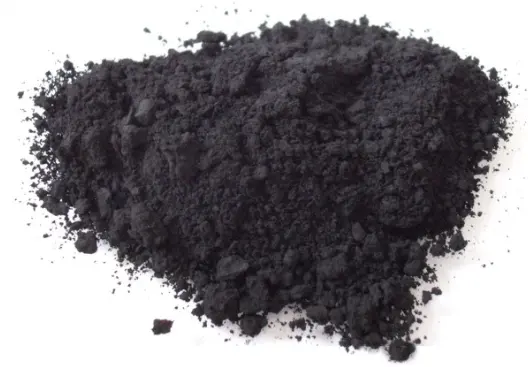
At its core, carbon black is a form of amorphous, elemental carbon. It's not soot or charcoal; it's a highly engineered material. Imagine an incredibly fine, intensely black powder. Each particle of this powder is composed of almost pure carbon. We create it through the incomplete combustion or thermal decomposition of a hydrocarbon feedstock, often heavy aromatic oils derived from coal tar or petroleum. The annual global production is over 10 million metric tons, which speaks to its immense industrial importance.
While it looks simple, carbon black is a complex material whose performance is dictated by its physical and chemical properties. It is one of the most powerful and cost-effective additives in the rubber and plastic industries. Its primary uses fall into three categories: as a reinforcing carbon filler, as a black pigment, and as a conductive agent. The specific properties of carbon black—which we'll explore in detail—are carefully controlled during the carbon black production process to create dozens of different grades, each tailored for a specific application, from the tire on your car to the black casing of your smartphone.
How are Different Types of Carbon Black Produced?
The magic of carbon black lies in its production process. The method used to create it has a direct and profound impact on its final properties, such as particle size and surface area. The vast majority of the world's carbon black—over 95%—is made using the furnace black process. This method offers excellent control over the final product, allowing us to produce a wide spectrum of carbon black grades.
In the furnace black process, a heavy oil feedstock is injected into a hot gas stream inside a closed reactor, or furnace. The intense heat breaks down the hydrocarbon into its basic elements, forming microscopic particles of carbon black. By precisely controlling factors like temperature, pressure, and feedstock rate, we can steer the size of the particle and the complexity of its structure. Other methods like the thermal black or channel black process exist, but the furnace method is dominant due to its efficiency and versatility in producing carbon black. The choice of process and the specific parameters used are what differentiate a carbon black meant for a high-performance tire from one designed to be a pigment in a coating.
What are the Fundamental Properties of Carbon Black?
To understand the use of carbon black, you have to understand its four primary properties: particle size, aggregate structure, surface area, and surface chemistry. These characteristics are all interconnected and determine how the carbon black will behave when mixed into a material like rubber or plastic. A procurement specialist doesn't just buy "carbon black"; they buy a specific set of properties to achieve a desired outcome.
- Particle Size: This is the most fundamental property of carbon black. It refers to the diameter of the primary, spherical particle.
- Aggregate Structure: During production, primary particles fuse together into chain-like or branched clusters called aggregates. The shape and complexity of these aggregates define the structure.
- Surface Area: This is a measure of the total area of the carbon black available for interaction with the surrounding polymer. It is heavily influenced by particle size.
- Surface Chemistry: The surface of the carbon black particle isn't perfectly clean. It contains small amounts of oxygen, hydrogen, and other elements, forming functional groups that can affect how it interacts with other materials.
These four properties work in concert. For example, a carbon black with a very small particle size will inherently have a very high specific surface area, which can lead to increased reinforcement but also requires increased mixing time and energy to disperse properly.
Why is Carbon Black's Particle Size So Important for Performance?
Particle size is the master variable that influences nearly all other performance aspects of carbon black. The size of the primary carbon black particles can range from as small as 8 nanometers to 100 nanometers in diameter. To put that in perspective, a human hair is about 80,000 nanometers thick. This incredibly small particle size is what gives carbon black its power. A general rule of thumb is that a smaller particle size leads to:
- Higher Reinforcement: More particles per unit of weight create a denser network within the host material, resulting in improved tensile strength and increased abrasion resistance.
- Higher Tinting Strength: When used as a pigment, smaller particles scatter light more effectively, producing a deeper, more intense black color.
- Higher Electrical Conductivity: Smaller particles allow for more particle-to-particle contact at lower loading levels, which is crucial for creating conductive plastics.
- Higher Viscosity: A smaller particle with its associated high surface area increases compound viscosity, making the rubber or plastic mixture thicker and harder to process.
Therefore, selecting the right particle size is a balancing act. For an application needing maximum durability, like a tire tread, a very small particle is ideal. For an application where easy processing is key, a larger particle might be chosen.
How Does the Surface Chemistry of Carbon Black Affect Its Function?
While particle size and structure are the physical architects of performance, the surface chemistry is the chemical director. The surface of the carbon black particle is not inert. During the high-temperature furnace process, small amounts of chemically-bound oxygen, hydrogen, and sulfur complexes—known as functional groups—are formed on the carbon black surface. The type and amount of these groups can be tweaked during production.
This surface chemistry plays a vital role in how the carbon black interacts with the polymer matrix. For instance, in inks and coatings, a higher level of oxygen-containing groups makes the carbon black surface more acidic and hydrophilic (water-loving). This improves the dispersion of the carbon black in water-based systems and enhances its bonding with polar resins. In rubber, specific functional groups can accelerate the vulcanization (curing) process. Understanding and controlling surface chemistry is key to developing specialty carbon blacks for high-tech applications beyond simple reinforcement.
Why is Carbon Black the Ultimate Reinforcing Filler in Tires?
The relationship between carbon black and the tire industry is legendary. About 70% of all carbon black produced is used as a reinforcing filler in tires. It's the reason tires are black, but its role goes far beyond color. When carbon black is used in rubber, it provides several important in-rubber properties that are essential for safety and performance.
The network of carbon black particles within the rubber elastomer dramatically increases its modulus (stiffness), tensile strength (resistance to breaking under tension), and abrasion resistance. This is what makes a tire tough enough to withstand thousands of miles of friction. Furthermore, carbon black also helps to conduct heat away from the tread and belt area of the tire. Heat buildup is a major cause of tire failure, so this thermal conductivity function is critical for extending a tire's life and ensuring its safety at high speeds. This powerful reinforcement is why carbon black is mainly used in nearly all tires and other rubber products.
How is Carbon Black Used as a Pigment in Plastic and Coatings?
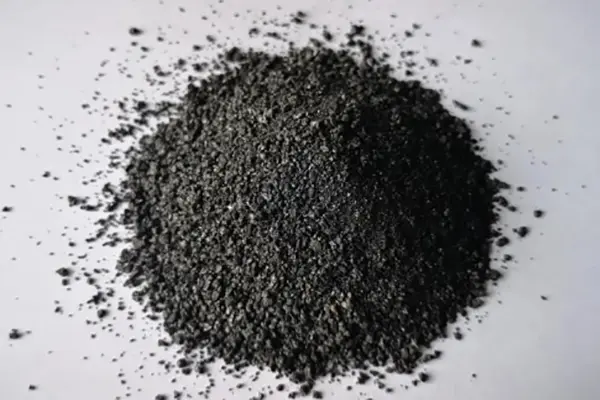
Beyond its reinforcing capabilities, carbon black is the most widely used black pigment in the world due to its intense color, high opacity, and excellent stability. When carbon black is used as a colorant in plastic, ink, or coating formulations, its performance is primarily judged by its tinting strength and color. These properties are, once again, heavily influenced by particle size.
Specialty carbon blacks produced for pigment applications have a very fine particle size, which provides a high tinting strength and a desirable blueish undertone. The challenge when using these fine particles is achieving good dispersion. If the carbon black particles are not properly separated and distributed throughout the plastic or coating, the result will be a dull, greyish color with poor performance. Therefore, the dispersion of the carbon black is a critical step, often requiring specialized mixing equipment and dispersing agents to unlock the full potential of the carbon black pigments. Its use as a colorant can be found everywhere, from black garbage bags and automotive parts to high-end electronics and laser printer toner. In some specific cases, it's even purified to be used as a food coloring (E153).
How Does Carbon Black Protect Plastic from UV Degradation?
One of the most valuable functions of carbon black in plastic applications is its ability to provide outstanding protection from ultraviolet (UV) radiation. Sunlight, specifically the UV portion of the spectrum, is highly damaging to most polymers. It breaks down the chemical bonds in the plastic, leading to discoloration, brittleness, and eventual failure. This is why a plastic chair left outside will crack and fade over time.
Carbon black is an excellent UV absorber. When carbon black is added to polypropylene or other plastics, the fine particles absorb the harmful UV radiation and convert it into harmless heat, which is then dissipated throughout the material. Just a small loading (2-3% by weight) of a well-dispersed carbon black can extend the outdoor lifespan of a plastic product by a factor of 10 or more. This makes it an essential additive for any black plastic part intended for outdoor use, such as agricultural films, water pipes, automotive trim, and outdoor furniture. This protective quality is a primary reason why carbon black is so indispensable in the rubber and plastic products industry.
Can Carbon Black Be Used to Modify Electrical Conductivity in Plastics?
Yes, absolutely. While most plastics are excellent electrical insulators, there are many applications where a degree of electrical conductivity is needed. This is particularly important for preventing the buildup of static electricity, which can damage sensitive electronic components or even create a spark hazard in flammable environments. Carbon black provides an effective and economical way to achieve this.
By selecting a carbon black with a very small particle size and a high structure, a conductive network can be formed within the insulating plastic matrix. Once a certain concentration is reached (the "percolation threshold"), the carbon black particles are close enough to allow electrons to flow through the material, transforming it from an insulator to a conductor. This principle is used to make anti-static bags for electronics, conductive fuel lines and containers, and even elements in radar absorbent materials. The ability to precisely control the level of conductivity by adjusting the type and amount of carbon black makes it an incredibly versatile additive for the electronics and automotive industries. This function highlights the incredible range of properties of carbon black. As a supplier of raw materials like Asphalt powder, we understand how crucial particle properties are for end-use performance.
How Do You Select the Right Carbon Black Grade for Your Application?
Choosing the right carbon black is a technical decision that involves balancing performance requirements, processing constraints, and cost. There is no one-size-fits-all solution. As a supplier, my team and I, at our High Quality Coal Tar Pitch Factory and Supplier, often work with clients to navigate these choices. The first step is to define the primary function: is it for reinforcement, pigmentation, or conductivity?
- For Reinforcement: You would look for a carbon black with a smaller particle size and a well-developed structure to maximize properties like tensile strength and abrasion.
- For Pigmentation: The focus would be on the smallest particle size you can effectively disperse to achieve the highest tinting strength and deepest black color.
- For Conductivity: You would select a grade known for its high structure and small particle diameter to build a conductive network at the lowest possible loading.
You must also consider how the chosen carbon black will affect the processing of your material. Finer grades of carbon black with high surface area can be difficult to disperse and will increase the viscosity of the plastic melt. This may require more powerful mixing equipment or longer cycle times. Ultimately, the best choice is often found through testing and collaboration between the product manufacturer and an experienced carbon black supplier. The relationship with a quality raw material provider, whether for carbon black or Modified asphalt, is key to success.
Key Takeaways to Remember
- Carbon Black is Engineered: It is a high-performance form of elemental carbon, not simple soot, with properties carefully controlled during production.
- Properties are Key: The performance of carbon black is governed by four main properties: particle size, structure, surface area, and surface chemistry.
- Particle Size Rules: The size of the primary particle is the most critical factor, influencing everything from reinforcement and color to conductivity.
- Versatile Reinforcer: It is the essential additive in tires, providing strength, durability, and heat dissipation.
- Essential for Plastics: In plastics, carbon black is a superior pigment, a powerful UV stabilizer, and an effective agent for controlling electrical conductivity.
- Selection is a Balance: Choosing the right grade requires a careful balance of desired performance, processing capabilities, and cost.
Post time: 11-20-2025